
Indo-Greek Kingdom (200–10 AD)
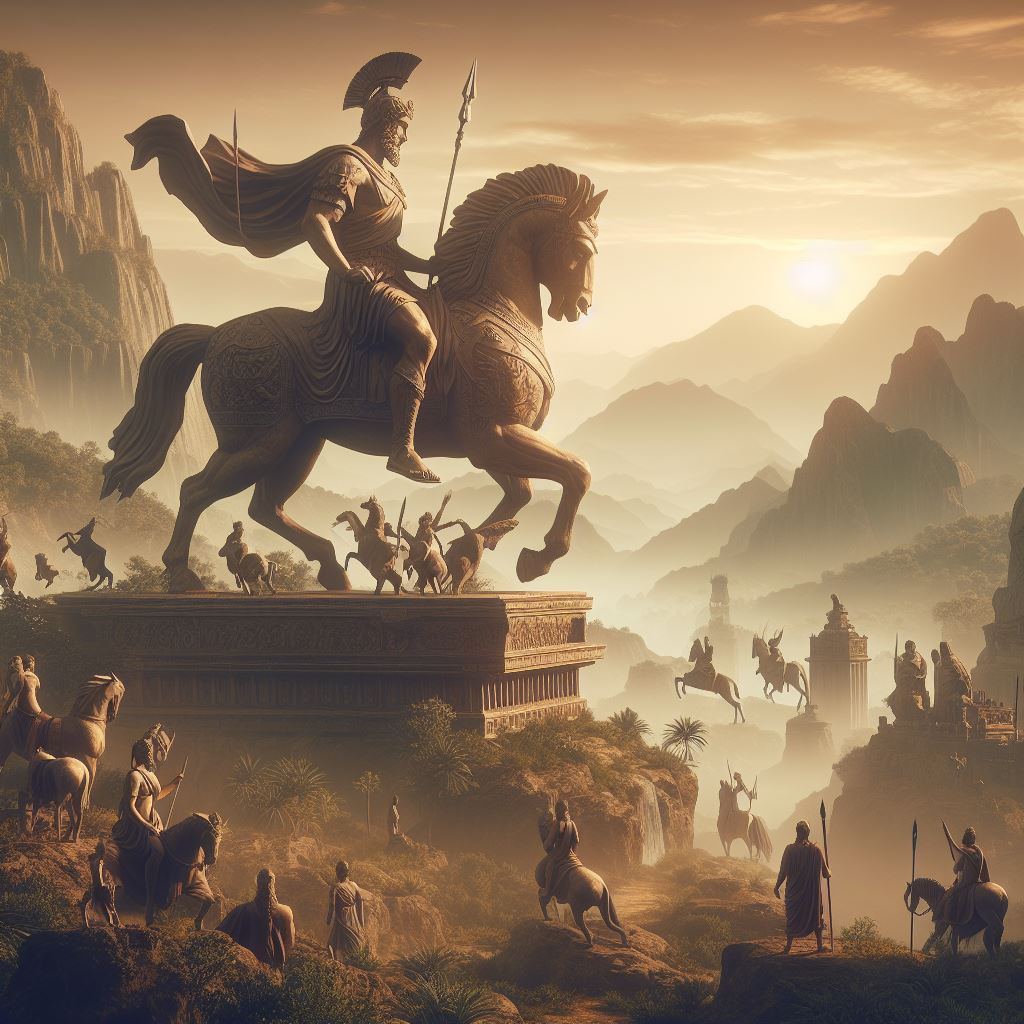
The Indo-Greek Kingdom (Yavana Kingdom) was an ancient Hellenistic kingdom in Northwest India from about 200 BC to 10 AD. It extended over areas of present-day Kashmir (lighter brown region), Pakistan and a part of northwestern India. It was formed when the Graeco-Bactrian king Demetrius invaded India, with the Indo-Greek Kingdom becoming a separate entity with Sagala in Punjab as its capital. Among the thirty successive kings, the most noted was Menander I.
Multiple dynastic polities with regional capitals (Taxila, Pushkalavati, Sagala) are combined under the term “Indo-Greek Kingdom.” The Indo-Greek kings are a product of a unique amalgamation between both cultures, observable not only in language but also in symbols and visual arts. This fusion is reflected in Greco-Buddhist art.
Indo-Greek rulers were of different ethnicities, some of whom were of Greek descent. The fragmented states like that of Indo-Greek went into decline after Menander’s death, followed by the establishment of new kingdoms and republics such as the Yaudheya Republic and Mitra dynasty. By 10 AD, Indo-Greeks were no longer a political entity following invasions by the Indo-Scythians, but Greek populations may have continued to exist under later rulers such as the Indo-Parthians and Kushans. This Western Satraps state persisted in existence until 415 CE.
Here are details about the rulers of the Indo-Greek Kingdom from 200 BCE to 10 CE:
- Demetrius I (200–190 BCE): Demetrius I played a crucial role in establishing the Indo-Greek Kingdom. He initiated the Greek presence in the Indian subcontinent.
- Agathocles, Pantaleon (190–180 BCE): These rulers shared power during this period, contributing to the consolidation of Greek influence in the region.
- Antimachus I (185–170 BCE): Antimachus I continued the expansion of the Indo-Greek Kingdom and is known for his coinage.
- Apollodotus I (180–160 BCE): Apollodotus I further strengthened Greek rule in the Indian subcontinent and issued coins bearing his image.
- Demetrius II (175–170 BCE): Demetrius II ruled alongside Antimachus II and is known for his contributions to the cultural exchange between the Greeks and Indians.
- Antimachus II (160–155 BCE): Continued the reign alongside Demetrius II, contributing to the Indo-Greek cultural synthesis.
- Eucratides (170–145 BCE): Eucratides expanded the kingdom and faced challenges from other rulers in the region.
- Menander I (155–130 BCE): Menander I is one of the most famous Indo-Greek kings, known for his patronage of Buddhism. His reign is considered a high point of Indo-Greek cultural exchange.
- Zoilos I, Agathokleia (130–120 BCE): These rulers continued Menander I’s legacy and contributed to the flourishing of art and culture.
- Lysias, Strato I (155–130 BCE): Rulers during the same period, they played a role in maintaining Indo-Greek territories.
- Antialcidas, Heliokles II (110–100 BCE): Contributed to the political stability of the kingdom during their rule.
- Polyxenos, Demetrius III (100 BCE): Rulers during a period of transition, facing challenges to Indo-Greek territories.
- Philoxenus (100–95 BCE): Philoxenus ruled during a time of political changes and maintained control over certain regions.
- Diomedes, Amyntas, Epander (95–90 BCE): These rulers faced the shifting political landscape and continued Indo-Greek governance.
- Theophilos, Peukolaos, Thraso (90 BCE): Rulers during a period of challenges to Indo-Greek rule.
- Nicias, Menander II, Artemidoros (90–85 BCE): This trio navigated the complex political situation and continued Indo-Greek influence.
- Hermaeus, Archebius (90–70 BCE): Rulers during a time of increased external pressures on the Indo-Greek Kingdom.
- Telephos, Apollodotus II (75–70 BCE): Faced challenges to Indo-Greek territories and governance.
- Hippostratos, Dionysios (65–55 BCE): Rulers during a period of decline in Indo-Greek influence.
- Zoilos II (55–35 BCE): Continued to rule during a time when the Indo-Greek Kingdom was facing significant challenges.
- Apollophanes (35–25 BCE): Ruler during the declining phase of the Indo-Greek Kingdom.
- Strato II, Strato III (25 BCE–10 CE): The last rulers of the Indo-Greek Kingdom, witnessing its eventual decline around 10 CE.
The Indo-Greek Kingdom represents a fascinating historical period marked by the blending of Greek and Indian cultures in the Indian subcontinent.