
Supreme Court of Pakistan
The Supreme Court of Pakistan serves as the highest judicial authority in the country, established on August 14, 1947, following the independence of Pakistan. It is located in Islamabad, specifically in the Red Zone area, and operates under the jurisdiction defined by the Constitution of Pakistan. The court’s primary role is to act as the final arbiter of legal and constitutional disputes, providing a critical check on legislative and executive powers.
Composition and Appointment
The court comprises 17 judges, each appointed through a rigorous process led by the Judicial Commission of Pakistan. Judges serve until they reach the compulsory retirement age of 65, ensuring continuity in judicial wisdom while allowing for periodic renewal within the court’s ranks. Appeals to decisions made by the Supreme Court are directed to the President of Pakistan for clemency or commutation of sentences, particularly in cases involving capital punishment. The Supreme Court also serves as the ultimate appellate body, with cases brought before it from the High Courts of Pakistan.
Current Leadership
The current Chief Justice of Pakistan, Justice Yahya Afridi, assumed office on 26 October 2024, with his term set to conclude on 25 October 2027. In this role, the Chief Justice not only presides over cases but also plays a pivotal part in administrative oversight and judicial policy within the court.
Jurisdiction and Powers
The Supreme Court exercises several types of jurisdiction:
- Original Jurisdiction: The Court has exclusive original jurisdiction in cases involving disputes between federal and provincial governments or among provincial governments. It can also hear cases related to fundamental rights if they involve significant public interest.
- Appellate Jurisdiction: The Supreme Court hears appeals against decisions made by High Courts and other lower courts. This jurisdiction allows it to review and overturn lower court rulings.
- Advisory Jurisdiction: The President may seek the Court’s opinion on legal questions of public importance, providing guidance on constitutional matters.
- Review Jurisdiction: The Supreme Court can review its own judgments under specific conditions, ensuring that justice is served.
The decisions made by the Supreme Court are binding on all other courts in Pakistan, ensuring consistency in legal interpretations.
Functions
The primary functions of the Supreme Court include:
- Interpreting the Constitution: The Court ensures that laws passed by Parliament comply with constitutional provisions.
- Protecting Fundamental Rights: It safeguards citizens’ rights as enshrined in the Constitution, addressing violations through judicial review.
- Resolving Disputes: The Supreme Court acts as a mediator in disputes involving governmental entities or between provinces.
- Maintaining Judicial Independence: It upholds the separation of powers among the legislative, executive, and judicial branches, ensuring that no branch oversteps its authority.
Historical Context
The Supreme Court was originally established under the 1956 Constitution, succeeding the Union Court of India. Over time, its location has shifted; it was initially based in Karachi but was permanently moved to Islamabad following the establishment of the 1973 Constitution. The current building, completed in 1993, features a blend of Islamic and Japanese architectural styles, symbolizing its role as a guardian of justice.
List of Justices of the Supreme Court of Pakistan
The Justices of the Supreme Court of Pakistan have each played a crucial role in interpreting the law and shaping the judiciary’s influence on society. Their decisions reflect not only legal principles but also the socio-political context of their respective tenures. From establishing judicial independence to upholding fundamental rights, these Justices have contributed to the evolution of constitutional law in Pakistan.
Below is a list of notable Justices, along with their tenures and contributions:
Justice from Islamabad (Islamabad High Court)
| Athar Minallah | |
| Appointment Date: 11 November 2022 Retirement Date: 12 December 2026 Tenure: Approximately 4 years, 1 month Additional Information: Known for judicial reforms, his appointment strengthens Islamabad High Court’s role in high-profile cases. | 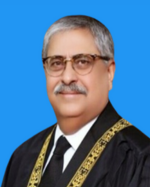 |
Justices from Punjab (Lahore High Court)
| Mansoor Ali Shah | |
| Appointment Date: 6 February 2018 Retirement Date: 27 November 2027 Tenure: Approximately 9 years, 10 months Additional Information: Contender for the 31st Chief Justice of Pakistan after Yahya Afridi’s retirement on 25 October 2027. | 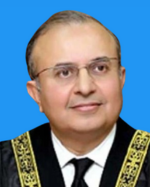 |
| Aminuddin Khan | |
| Appointment Date: 22 October 2019 Retirement Date: 30 November 2025 Tenure: Approximately 6 years, 1 month Additional Information: Justice Khan has a strong reputation for his work in civil and criminal law, representing Punjab’s rich legal history in the Supreme Court. | 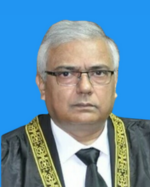 |
| Ayesha Malik | |
| Appointment Date: 23 January 2022 Retirement Date: 2 June 2031 Tenure: Approximately 9 years, 4 months Additional Information: Justice Malik is the first woman to serve on Pakistan’s Supreme Court, a historic appointment from the Lahore High Court known for her advocacy in human rights and gender equality. |  |
| Shahid Waheed | |
| Appointment Date: 11 November 2022 Retirement Date: 24 December 2031 Tenure: Approximately 9 years, 1 month Additional Information: Known for his expertise in constitutional law, Justice Waheed’s appointment underscores Lahore High Court’s contribution to upholding Pakistan’s constitutional framework. | 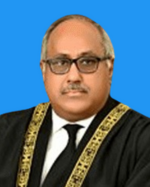 |
| Malik Shehzad Ahmed Khan | |
| Appointment Date: 25 June 2024 Retirement Date: 24 March 2028 Tenure: Approximately 3 years, 9 months Additional Information: His career is marked by notable cases that address civil liberties and fundamental rights. |  |
| Shahid Bilal Hassan | |
| Appointment Date: 25 June 2024 Retirement Date: 11 March 2030 Tenure: Approximately 5 years, 8 months Additional Information: Justice Hassan’s expertise includes economic and environmental law, which is crucial for judicial responses to modern issues in Pakistan. | 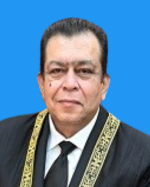 |
| Ad Hoc Justice: Sardar Tariq Masood | |
| Appointment Date: 29 July 2024 Retirement Date: 29 July 2025 Tenure: 1 year Additional Information: His temporary appointment helps address case backlogs, reflecting Punjab’s commitment to judicial efficiency. |  |
Justices from Sindh (Sindh High Court)
| Munib Akhtar | |
| Appointment Date: 8 May 2018 Retirement Date: 13 December 2028 Tenure: Approximately 10 years, 7 months Additional Information: Contender for the 31st Chief Justice of Pakistan after Yahya Afridi’s retirement. |  |
| Muhammad Ali Mazhar | |
| Appointment Date: 16 August 2021 Retirement Date: 4 October 2029 Tenure: Approximately 8 years, 2 months Additional Information: Also a contender for the 31st Chief Justice of Pakistan. | 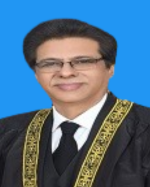 |
| Hasan Azhar Rizvi | |
| Appointment Date: 11 November 2022 Retirement Date: 1 February 2027 Tenure: Approximately 4 years, 2 months Additional Information: Justice Rizvi is recognized for his dedication to safeguarding minority rights, enhancing Sindh High Court’s legacy in social justice. |  |
| Irfan Saadat Khan | |
| Appointment Date: 3 November 2023 Retirement Date: 6 February 2028 Tenure: Approximately 4 years, 3 months Additional Information: His judgments in public interest cases highlight his role in representing Sindh’s legal traditions. | 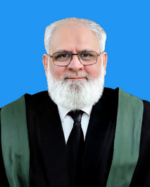 |
| Aqeel Ahmed Abbasi | |
| Appointment Date: 25 June 2024 Retirement Date: 15 June 2028 Tenure: Approximately 4 years Additional Information: His extensive background in tax law reflects Sindh’s contribution to economic jurisprudence in the Supreme Court. |  |
Justices from Khyber Pakhtunkhwa (Peshawar High Court)
| Yahya Afridi | |
| Appointment Date: 28 June 2018 Retirement Date: 25 October 2027 Tenure: Approximately 9 years, 4 months Additional Information: Currently serving as the 30th Chief Justice of Pakistan. |  |
| Musarrat Hilali | |
| Appointment Date: 7 July 2023 Retirement Date: 7 August 2026 Tenure: Approximately 3 years, 1 month Additional Information: As the second woman in the Supreme Court, she represents Peshawar High Court’s commitment to diversity. |  |
| Ad Hoc Justice: Mazhar Alam Miankhel | |
| Appointment Date: 29 July 2024 Retirement Date: 29 July 2025 Tenure: 1 year Additional Information: Known for his quick decisions, Justice Miankhel supports Khyber Pakhtunkhwa’s efforts to manage judicial workloads effectively. |  |
Justices from Balochistan (Balochistan High Court)
| Jamal Khan Mandokhail | |
| Appointment Date: 9 August 2021 Retirement Date: 10 November 2026 Tenure: Approximately 5 years, 3 months Additional Information: Represents Balochistan’s emphasis on rural and tribal law, bringing a unique legal perspective to the Supreme Court. | 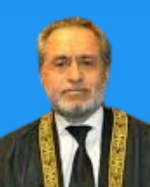 |
| Naeem Akhtar Afghan | |
| Appointment Date: 11 March 2024 Retirement Date: 28 June 2028 Tenure: Approximately 4 years, 3 months Additional Information: His focus on land and water rights highlights Balochistan High Court’s role in addressing regional legal issues. | 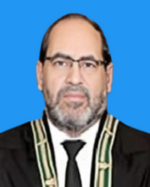 |
Shariat Appellate Bench (Ad Hoc Appointments)
| Muhammad Al-Ghazali | |
| Institution of Precedence: International Islamic University Additional Information: Alma Mater: Islamia University, Bahawalpur. |  |
| Khalid Masud | |
| Institution of Precedence: International Islamic University Additional Information: Alma Mater: McGill University, Canada. | 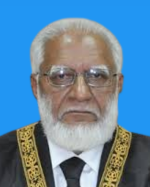 |
Recent Developments
In recent years, there have been significant discussions regarding judicial reform and the balance of power between the judiciary and other branches of government. Notably, on October 21, 2024, the National Assembly passed the 26th Amendment, altering how the Chief Justice is appointed. This amendment allows a Special Parliamentary Committee to nominate candidates from among the three most senior judges, introducing a fixed term for the Chief Justice.
As an essential pillar of democracy in Pakistan, the Supreme Court not only interprets laws but also safeguards citizens’ rights against arbitrary governance. Its evolving structure and jurisdiction reflect ongoing efforts to adapt to the changing political landscape while ensuring justice remains accessible to all.
I do enjoy the manner in which you have presented this situation and it really does offer me personally some fodder for consideration. On the other hand, from what precisely I have personally seen, I simply trust when the actual responses pack on that individuals keep on point and not start upon a soap box involving some other news du jour. Anyway, thank you for this superb point and though I can not really agree with this in totality, I value your standpoint.