
Gupta Empire (320–550 CE)
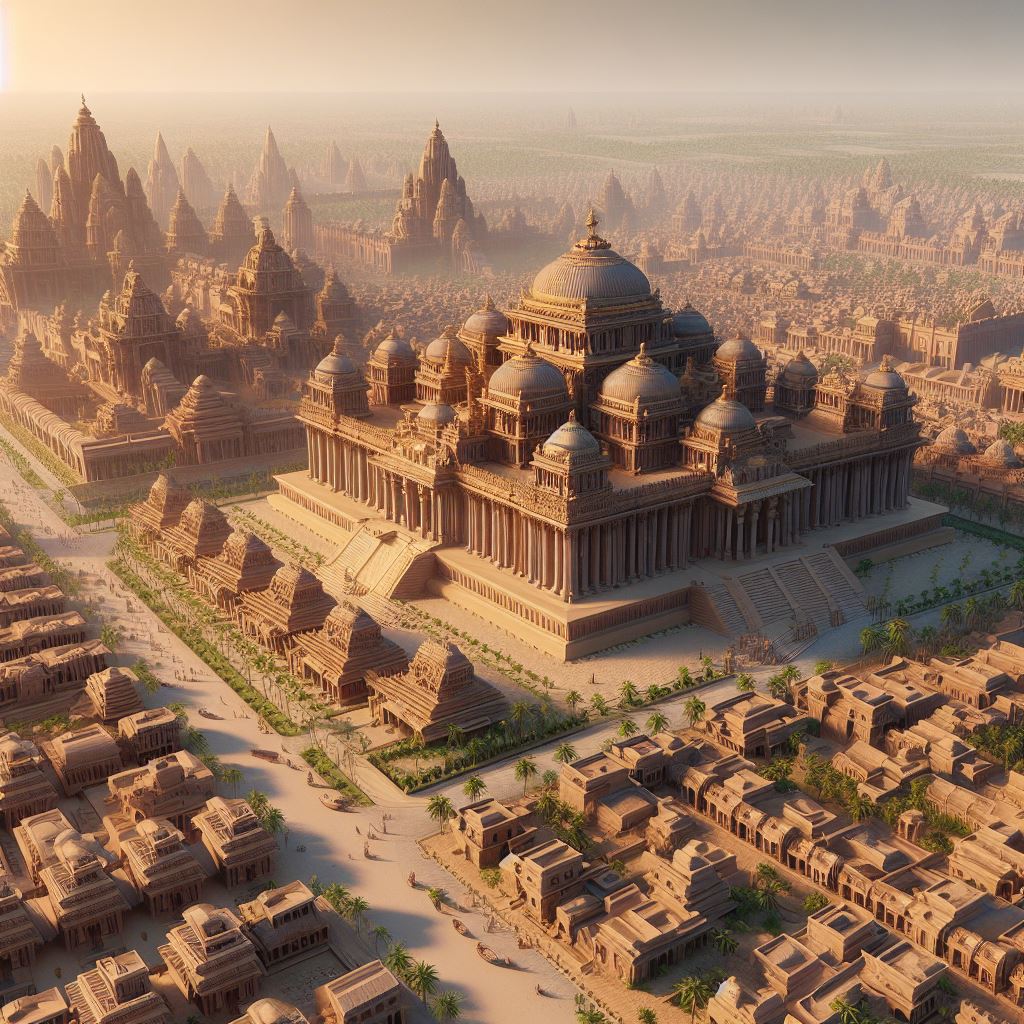
The Gupta Empire was an ancient Indian dynasty that thrived from the early 4th to the early 6th century CE, covering a large part of the Indian subcontinent. Considered by some as India’s Golden Age, it saw notable rulers like Chandragupta I, Samudragupta, Chandragupta II, and Skandagupta.
During its peak (319–467 CE), the Gupta Empire achieved cultural brilliance. Key leaders like Samudragupta, Chandragupta II, and Kumaragupta I fostered cultural developments, canonizing Hindu epics, and nurturing scholars like Kalidasa, Aryabhata, Varahamihira, and Vatsyayana.
The Gupta era marked advancements in science, administration, and the arts, creating standards that influenced Indian and even global art. It was a time of prosperity and strong trade, making the region a significant cultural center. The Guptas followed Hinduism, but they were tolerant of other faiths. However, the empire declined due to internal conflicts, loss of territory, and invasions by the Huna peoples from Central Asia. After the Gupta Empire’s collapse in the 6th century, India entered a period of rule by various regional kingdoms.
The Gupta Empire, considered a golden age in Indian history, had a series of rulers during its existence. Here’s an outline of the Gupta emperors based on the timeline provided:
1. Gupta (c. late 3rd century)
- The Gupta Dynasty’s foundational period with limited historical details.
2. Ghatotkacha (c. late 3rd century – 319 CE)
- A ruler with unclear historical details. His reign marks the early phase of the Gupta Dynasty.
3. Chandragupta I (c. 319 – 335/350 CE)
- Founder of the Gupta Empire, married Kumaradevi. Established the Gupta rule and laid the groundwork for the dynasty’s growth.
4. Kacha (Early 4th Century?)
- Limited information about Kacha’s reign. Historical uncertainties surround this ruler.
5. Samudragupta (c. 335/350 – 375 CE)
- Renowned for military conquests and cultural patronage, Expanded the Gupta Empire through strategic military campaigns.
6. (Ramagupta) (Late 4th Century?)
- Historical debates exist regarding the existence and reign of Ramagupta, Uncertainty surrounds this particular ruler.
7. Chandragupta II (380 – 413/415 CE)
- A golden period marked by prosperity and cultural achievements, The Gupta Empire reached its zenith under his rule.
8. Kumaragupta I (415 – 455 CE)
- Faced external threats but successfully repelled them, Contributed to the empire’s stability and growth.
9. Skandagupta (455 – 467 CE)
- Successfully defended against Huna invasions, Maintained the territorial integrity of the Gupta Empire.
10. Purugupta (467 – 473 CE)
- Mentioned in historical accounts during this period. – Specific details about his reign may be limited.
11. Kumaragupta II (473 – 476 CE)
- Ruled during a challenging time with internal conflicts and invasions. The empire faced increased instability during this period.
12. Budhagupta (476 – 495 CE)
- Faced invasions and internal challenges. Contributed to the declining phase of the Gupta Empire.
13. Narasimhagupta (495 – ?)
- The exact end of Narasimhagupta’s reign is uncertain. Part of the period marked by Gupta Empire’s decline.
14. (Bhanugupta) (c. 510 CE)
- Historical records about Bhanugupta are not very clear. Variations in rulers’ namesmay contribute to uncertainty.
15. Vainyagupta (c. 507 CE)
- Mentioned in historical accounts around this time. Specific details about his reign may be limited.
16. Kumaragupta III (c. 530 CE)
- The Gupta Empire experienced a period of decline. Regional rulers gained prominence during this phase.
17. Vishnugupta (540 – 550 CE)
- The last recognized ruler of the Gupta Empire. The Gupta Empire had already disintegrated by this time.
These rulers collectively played a crucial role in shaping the Gupta Empire’s history, contributing to its cultural, scientific, and political achievements.
Your point of view caught my eye and was very interesting. Thanks. I have a question for you.