
Chief Secretary of Sindh
The Chief Secretary of Sindh (CS Sindh) is the highest-ranking bureaucratic official in the Government of Sindh. They serve as the administrative head, overseeing all government departments within the province. To hold this position, the individual must be a BPS-22 officer, and their appointment is made by the Prime Minister of Pakistan. The Chief Secretary’s rank is equivalent to that of a Federal Secretary.
Syed Asif Hyder Shah currently holds the position of Chief Secretary of Sindh, having assumed office in March 2024. As the executive bureaucratic head of the province, the Chief Secretary is responsible for advising the Chief Minister on administrative matters. All Secretaries and Divisional Commissioners report directly to the Chief Secretary. Provincial Ministers also report to the Chief Secretary on administrative issues. The Prime Minister holds the sole authority to appoint or remove the Chief Secretary from their position. Additionally, the Chief Secretary serves as the Cabinet Secretary of Sindh.
The Chief Secretary’s principal workplace is the Chief Secretary’s Office, located within the Sindh Secretariat. The Chief Secretary also has a dedicated secretariat known as the Chief Secretary’s Secretariat. The official residence of the Chief Secretary is the Chief Secretary House, which also functions as a camp office.
List of All Chief Secretaries of Sindh
Here is a list of all individuals who have served as Chief Secretaries of Sindh:
| Javed Ashraf Hussain | |
| Assumed Office: June 2000 Left Office: July 2002 Tenure: 2 years, 1 month Notable: Javed Ashraf Hussain’s tenure was marked by efforts to streamline administrative processes and enhance public service efficiency. He played a crucial role in initiating several governance reforms. | |
| KB Rind | |
| Assumed Office: July 2002 Left Office: June 2003 Tenure: 11 months Notable: KB Rind focused on improving law and order in Sindh. His tenure included measures aimed at strengthening the police force and enhancing public safety. | |
| Mutawakkil Kazi | |
| Assumed Office: June 2003 Left Office: July 2004 Tenure: 1 year, 1 month Notable: Mutawakkil Kazi emphasized economic development and infrastructure projects. His efforts contributed to several key development initiatives in the province. | |
| Aslam Sanjrani | |
| Assumed Office: July 2004 Left Office: May 2005 Tenure: 10 months Notable: Aslam Sanjrani worked on improving the education and health sectors. His tenure saw the implementation of various programs aimed at enhancing educational and healthcare facilities. | |
| Fazal-ur-Rehman | |
| Assumed Office: May 2005 Left Office: March 2007 Tenure: 1 year, 10 months Notable: Fazal-ur-Rehman’s tenure was characterized by administrative reforms and efforts to improve governance. He introduced measures to enhance the efficiency of public service delivery. |  |
| Shakeel Durrani | |
| Assumed Office: March 2007 Left Office: July 2007 Tenure: 4 months Notable: Shakeel Durrani’s brief tenure focused on maintaining administrative stability and continuity. He worked on ensuring smooth functioning of government departments. | |
| Ejaz Qureshi | |
| Assumed Office: July 2007 Left Office: November 2007 Tenure: 4 months Notable: Ejaz Qureshi concentrated on disaster management and relief efforts. His tenure included significant work on improving the province’s response to natural disasters. |  |
| Fazal-ur-Rehman | |
| Assumed Office: November 2007 Left Office: August 2010 Tenure: 2 years, 9 months Notable: In his second term, Fazal-ur-Rehman continued his efforts to implement administrative reforms and improve governance. He worked on several development projects aimed at enhancing public services. |  |
| Abdul Subhan Memon | |
| Assumed Office: March 2011 Left Office: April 2013 Tenure: 2 years, 1 month Notable: Abdul Subhan Memon focused on rural development and agricultural reforms. His efforts contributed to the improvement of living conditions in rural areas of Sindh. | |
| Muhammad Ijaz Chaudhry | |
| Assumed Office: April 2013 Left Office: November 2013 Tenure: 7 months Notable: Muhammad Ijaz Chaudhry’s tenure saw efforts to enhance inter-departmental coordination and streamline administrative processes. He worked on improving the efficiency of government operations. |  |
| Sajjad Saleem Hotiana | |
| Assumed Office: November 2013 Left Office: March 2015 Tenure: 1 year, 4 months Notable: Sajjad Saleem Hotiana concentrated on governance reforms and public service delivery. His tenure included initiatives aimed at improving transparency and accountability. |  |
| Muhammad Siddique Memon | |
| Assumed Office: March 2015 Left Office: November 2016 Tenure: 1 year, 8 months Notable: Muhammad Siddique Memon’s efforts were focused on urban development and infrastructure projects. He played a key role in several major development initiatives in urban areas. |  |
| Rizwan Memon | |
| Assumed Office: November 2016 Left Office: June 2018 Tenure: 1 year, 7 months Notable: Rizwan Memon worked on enhancing the province’s economic development and industrial growth. His tenure included efforts to attract investment and promote industrialization. |  |
| Azam Suleman Khan | |
| Assumed Office: June 2018 Left Office: September 2018 Tenure: 3 months Notable: Azam Suleman Khan’s brief tenure was marked by efforts to improve law and order and enhance administrative efficiency. He worked on several initiatives aimed at strengthening public safety. |  |
| Mumtaz Ali Shah | |
| Assumed Office: September 2018 Left Office: March 2022 Tenure: 3 years, 6 months Notable: Mumtaz Ali Shah focused on governance reforms and public service delivery. His tenure included significant work on improving the efficiency and effectiveness of government operations. |  |
| Sohail Rajput | |
| Assumed Office: April 2022 Left Office: August 2023 Tenure: 1 year, 4 months Notable: Sohail Rajput worked on enhancing infrastructure development and economic growth. His efforts contributed to several key development projects aimed at boosting the province’s economy. |  |
| Fakhre Alam Irfan | |
| Assumed Office: August 2023 Left Office: March 2024 Tenure: 7 months Notable: Fakhre Alam Irfan focused on improving education and health services. His tenure saw the implementation of various programs aimed at enhancing educational and healthcare facilities. |  |
| Syed Asif Hyder Shah | |
| Assumed Office: March 2024 Left Office: Incumbent Tenure: Ongoing Notable: Syed Asif Hyder Shah, the current Chief Secretary, is working on sustainable development and governance reforms. His initiatives aim at long-term improvements in public administration and service delivery. | 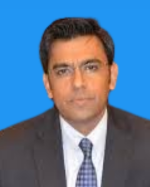 |
The Chief Secretary of Sindh is a key figure in the provincial government, responsible for providing administrative leadership and ensuring the efficient functioning of the bureaucracy. The list of Chief Secretaries highlights the important role they play in shaping the development and progress of Sindh.